Solar for Restaurants in Punjab: Cost, Savings & ROI
Running a restaurant involves more than food preparation and customer service. Electricity is needed for refrigeration, kitchen equipment, lighting, air conditioning, exhaust systems, water pumps and other essential operations.
For restaurant owners in Punjab, these electricity expenses can affect monthly operating costs and overall profitability.
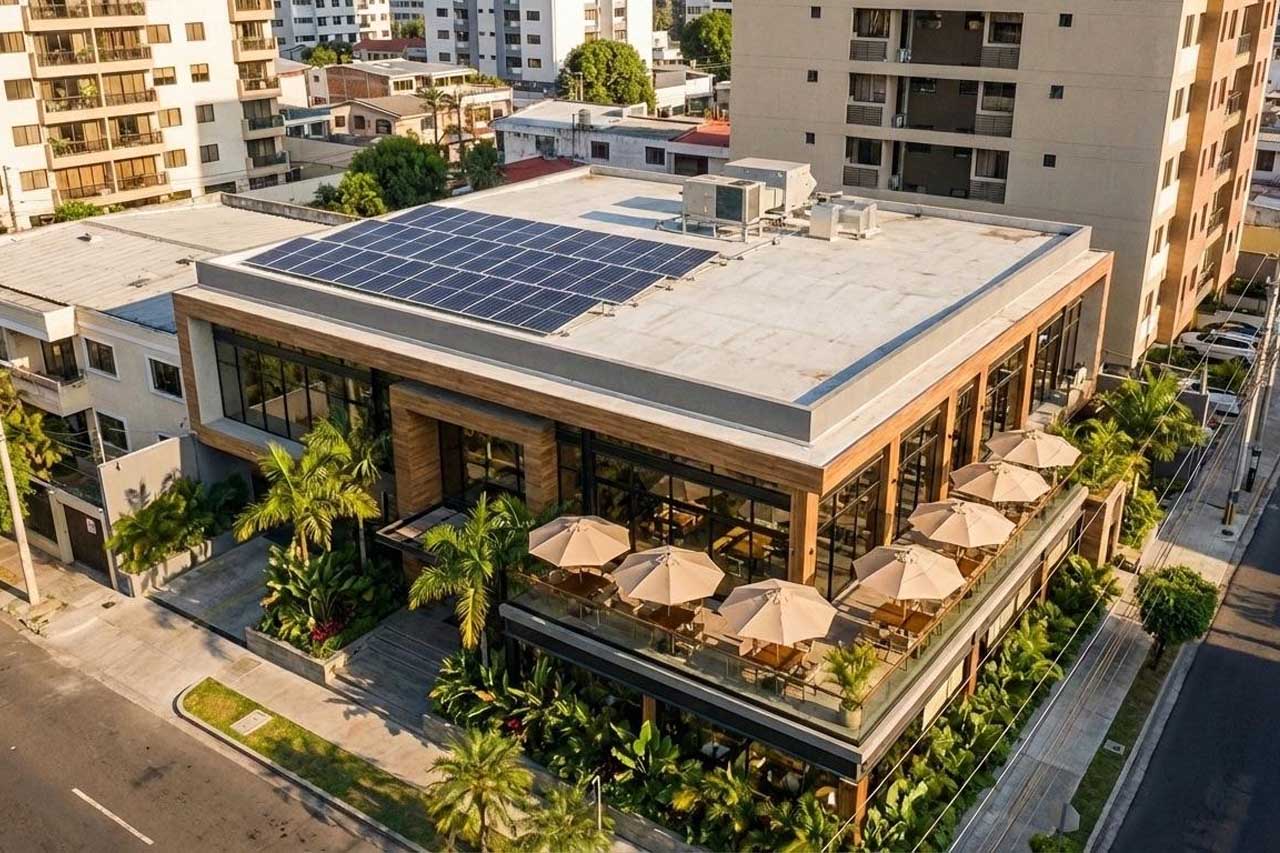
Installing a suitable rooftop solar system can help restaurants generate electricity on-site and reduce the amount of power purchased from the grid. However, the right system depends on the restaurant’s operating hours, kitchen equipment, electricity consumption, roof space and backup requirements.
In this guide, we explain how solar for restaurants in Punjab works, what affects installation costs, how to evaluate potential savings and how to choose the right solar installation company.
Why Should Restaurants in Punjab Consider Solar?
Restaurants often use electricity for several hours a day, and some operate from morning until late at night. Refrigeration and other equipment may also need to run outside customer-serving hours.
Common electricity-consuming equipment includes:
- Refrigerators and deep freezers
- Air conditioners and ventilation systems
- Kitchen equipment
- Exhaust fans and hoods
- Lighting and decorative fixtures
- Water pumps
- Dishwashing equipment
- Billing computers and POS systems
- CCTV and security equipment
- Signboards and outdoor lighting
A properly designed solar system can generate electricity during daylight hours and offset part of a restaurant’s electricity consumption.
Main benefits of restaurant solar
1. Potential electricity-bill savings
Solar electricity used directly by the restaurant can reduce the amount of electricity purchased from the grid.
2. Better management of operating costs
Solar can help businesses plan for a portion of their long-term energy expenses.
3. Productive use of rooftop space
Suitable rooftops can generate electricity without requiring separate land.
4. Support for sustainability goals
Using renewable electricity can support a restaurant’s environmental initiatives.
5. Potential long-term financial returns
The investment’s performance depends on system cost, electricity generation, consumption patterns, applicable tariffs and maintenance.
Actual savings should be calculated using the restaurant’s electricity bills rather than a generic savings percentage.
Which Restaurants Are Suitable for Solar?
Different restaurant formats have different energy requirements.
Small restaurants and cafés
Cafés and smaller restaurants may use electricity for refrigeration, lighting, coffee equipment, fans, air conditioning and billing systems. A smaller rooftop system may be suitable, depending on consumption and roof availability.
Family restaurants
Family restaurants can have substantial daytime and evening electricity demand from kitchen equipment, refrigeration, ventilation and customer-area cooling.
Restaurants with large kitchens
Commercial kitchens may use a mix of electrical and gas-powered equipment. A site assessment should identify which appliances consume electricity and when they operate.
Hotels with restaurants
A restaurant inside a hotel may share electrical infrastructure with guest rooms, laundry, cooling and other facilities. Solar sizing should consider the wider property’s consumption where appropriate.
Cloud kitchens
Cloud kitchens may have limited customer seating but significant equipment and refrigeration loads. Their operating schedule and electrical consumption should guide the system design.
How Much Solar Does a Restaurant Need?
There is no single system size suitable for every restaurant.
Depending on electricity usage and site conditions, a business may evaluate systems such as 3kW, 5kW, 10kW or larger commercial installations.
The recommended capacity depends on:
- Monthly electricity consumption
- Daytime electricity demand
- Operating hours
- Refrigeration and cooling loads
- Available rooftop space
- Roof structure and condition
- Sanctioned load and contract demand, where applicable
- Existing electrical infrastructure
- Future expansion plans
A restaurant with a large roof does not necessarily need a large solar system. The design should match the business’s electricity requirements and applicable utility rules.
Before selecting capacity, review at least 6–12 months of electricity bills if available.
What Is the Cost of Solar for Restaurants in Punjab?
The cost varies by system size, equipment selection, installation conditions and electrical requirements.
A commercial solar quotation may include:
- Solar panels
- Inverters
- Mounting structures
- DC and AC cables
- Electrical protection equipment
- Earthing and lightning protection
- Monitoring equipment
- Installation and testing
- Roof repairs, if required
- Electrical integration
- Applicable metering and utility requirements
Additional costs may arise if the roof needs repairs, the cable route is complex or the existing electrical system requires modification.
A hybrid system with battery storage will generally cost more than a comparable on-grid system without batteries.
For an accurate estimate, restaurant owners should request a site survey and a detailed quotation based on their electricity bills and property conditions.
How Can Solar Reduce a Restaurant’s Electricity Bill?
The financial benefit depends on how much solar electricity the restaurant generates and how much it can use directly.
For example, a restaurant that operates during daylight hours may use solar generation for refrigeration, lighting, ventilation and some kitchen equipment.
A restaurant that mainly operates at night may have a different consumption profile and may need a more careful assessment of how generated electricity will be used or credited under the applicable billing arrangement.
Important factors include:
- Installed solar capacity
- Expected electricity generation
- Daytime consumption
- Applicable electricity tariff
- Grid import and export arrangements
- System maintenance and downtime
- Financing and operating costs
Do not assume that every unit generated will save the same amount. Directly consumed electricity and exported surplus electricity may have different financial values.
On-Grid vs Hybrid Solar for Restaurants
Choosing the right system depends on whether the restaurant primarily wants to reduce electricity costs or also needs backup power.
On-grid solar system
An on-grid system works alongside the utility grid and is often worth evaluating when the main objective is reducing electricity purchases.
Potential advantages include:
- No large battery bank
- Lower initial cost than a comparable battery-based system
- Suitability for businesses with daytime electricity demand
- Potential to expand, subject to technical and regulatory feasibility
A standard on-grid solar system generally shuts down during a grid outage and does not provide backup electricity on its own.
Hybrid solar system
A hybrid system combines solar generation with battery storage and grid power.
It may be useful when a restaurant wants backup for selected loads, such as:
- Billing systems
- CCTV and security equipment
- Internet equipment
- Emergency lighting
- Selected refrigeration circuits
- Other essential equipment
Battery storage increases the project cost. The system should be designed around the actual backup requirement rather than assuming the entire kitchen and air-conditioning system can operate during a power cut.
For refrigeration and food storage, owners should carefully evaluate backup duration and the electrical requirements of their equipment.
Can Solar Run Restaurant Kitchen Equipment?
Solar can contribute to a restaurant’s electricity requirements, but the system must be designed around the appliances and electrical infrastructure.
A professional assessment should consider:
- Total connected load
- Simultaneous appliance usage
- Motor and compressor starting currents
- Electrical supply characteristics
- Inverter capacity
- Protection equipment
- Operating schedule
Restaurants that use gas for cooking may have different electricity requirements from kitchens that rely heavily on electric cooking equipment.
A solar installer should review the actual equipment rather than estimate system size from the restaurant’s floor area alone.
Is Every Restaurant Roof Suitable for Solar?
No. A rooftop assessment is important before installation.
The installer should check:
Roof strength: Confirm that the structure can safely support the proposed system.
Roof condition: Identify leaks, corrosion or other repairs needed before installation.
Shading: Nearby buildings, trees, water tanks and ventilation equipment may affect generation.
Usable space: Kitchen exhaust systems, HVAC equipment and access routes can reduce the available area.
Drainage: The design should preserve existing roof drainage.
Safety and access: Panels and electrical equipment should remain accessible for inspection and maintenance.
Restaurants operating in leased premises should also confirm permission from the property owner before committing to the project.
Can Restaurants in Punjab Use Net Metering?
Grid-connected rooftop solar arrangements in Punjab depend on the applicable regulations, consumer category, system configuration and prevailing utility requirements.
Restaurants should confirm their eligibility and the applicable billing or export arrangement with the relevant electricity utility before finalising system capacity.
Do not assume that surplus electricity exported to the grid will be credited at the same rate as electricity purchased. This can materially affect the project’s financial returns.
The quotation and financial assessment should state the assumptions used for self-consumption, exported electricity and applicable tariffs.
Is Government Solar Subsidy Available for Restaurants?
Restaurant owners should not assume that residential rooftop solar subsidies apply to a commercial electricity connection.
Eligibility depends on the particular programme and consumer category. Before including any subsidy in the project budget, verify the current official conditions.
For a commercial restaurant installation, the initial financial assessment should consider:
- Total project cost
- Expected solar generation
- Electricity consumed on-site
- Applicable electricity tariff
- Export settlement, where relevant
- Maintenance costs
- Financing costs, if applicable
A reliable proposal should clearly identify any incentive that is being claimed and explain its eligibility requirements.
How to Calculate Solar ROI for a Restaurant
Before investing, estimate the annual financial benefit using the restaurant’s actual electricity data.
A simplified calculation is:
Annual net benefit = value of solar electricity used or credited − annual operating and maintenance costs
Simple payback period = initial project investment ÷ annual net benefit
This is a preliminary calculation, not a guaranteed return.
A detailed financial model should account for financing, system degradation, maintenance, equipment replacement, tariff changes and the applicable electricity settlement arrangement.
Restaurant owners should be cautious of guaranteed payback claims that are not supported by a site-specific assessment.
How to Choose the Right Solar Company for Your Restaurant
A low quotation does not automatically represent the best long-term value.
Before selecting an installer, check:
- Experience with commercial solar installations
- Quality and specifications of the panels and inverter
- Mounting structure and roof suitability
- Electrical protection and earthing
- Detailed installation scope
- Monitoring facilities
- Warranty terms
- Utility documentation and applicable approvals
- After-sales service
- Maintenance support
Ask for a written quotation that clearly explains what is included and what may cost extra.
How A.P. Tech Solar Can Help Restaurant Owners
A.P. Tech Solar Technologies provides solar solutions for different property and business requirements.
For a restaurant considering rooftop solar, the first step is to assess electricity bills, operating hours, roof suitability and the equipment that needs power.
A customised proposal should explain:
- Recommended system capacity
- Equipment specifications
- Rooftop installation requirements
- Estimated solar generation
- Expected financial benefits and assumptions
- Project cost
- Applicable utility requirements
- Monitoring and after-sales support
This approach helps restaurant owners evaluate solar based on their own business needs rather than selecting a system solely by advertised price.
Planning solar for your restaurant in Punjab? Contact A.P. Tech Solar for a site assessment and customised commercial solar quotation.
Frequently Asked Questions
Is solar suitable for restaurants in Punjab?
It can be suitable for restaurants with appropriate rooftop space, electricity demand and technical conditions. A site assessment is necessary to determine feasibility.
How much solar does a restaurant need?
The capacity depends on electricity bills, operating hours, refrigeration and cooling loads, available roof space and applicable electrical requirements.
Can solar reduce restaurant electricity bills?
Yes. A properly designed system can reduce grid electricity purchases. The actual savings depend on generation, direct consumption, tariffs and export arrangements.
Does a restaurant need a battery?
Not necessarily. An on-grid system may be sufficient when the main objective is reducing electricity costs. Batteries are worth considering when selected loads need backup.
Can solar run refrigerators and freezers?
Solar can supply electricity to refrigeration equipment when the system is designed to accommodate the relevant loads. Backup during grid outages requires an appropriate system design.
Is solar suitable for a rented restaurant property?
Potentially, provided the roof is suitable and the owner grants the necessary permission. The lease term and responsibility for installation and maintenance should be considered.
How can I get a solar quotation for my restaurant?
Prepare recent electricity bills, operating hours and basic roof information. A professional installer can use these details and a site survey to prepare a customised proposal.