Solar for Schools in Punjab: Cost, Benefits & Installation Guide
Electricity is an important operating expense for schools, colleges and other educational institutions. Classrooms, computer laboratories, administrative offices, lighting, fans, air conditioning, water pumps and other equipment can contribute to regular electricity consumption.
For educational institutions in Punjab, rooftop solar can provide an opportunity to generate electricity on-site and reduce the amount purchased from the grid.
A well-planned solar installation can also help schools make productive use of their rooftops while supporting their sustainability goals.
However, every campus has different electricity requirements, roof conditions and operating schedules. Before choosing a system, school management should evaluate the institution’s electricity bills, available rooftop space and applicable utility requirements.
This guide explains how solar for schools in Punjab works, what affects installation costs, how institutions can evaluate potential savings and what to check before selecting a solar installation company.
Why Should Schools in Punjab Consider Solar?
Schools use electricity for a variety of purposes throughout the academic day.
Common electricity-consuming equipment includes:
-
Classroom fans and lighting
-
Computer laboratories
-
Smart boards and projectors
-
Office computers and printers
-
Air-conditioning systems
-
Water pumps
-
CCTV and security systems
-
Libraries and laboratories
-
Hostels and canteens
-
Sports and common-area lighting
When electricity consumption coincides with solar generation, the institution may be able to use a portion of the electricity generated by its rooftop system directly.
Key benefits of school solar
1. Potential electricity-bill savings
Solar electricity used on-site can reduce the amount of power purchased from the grid.
2. Productive use of rooftops
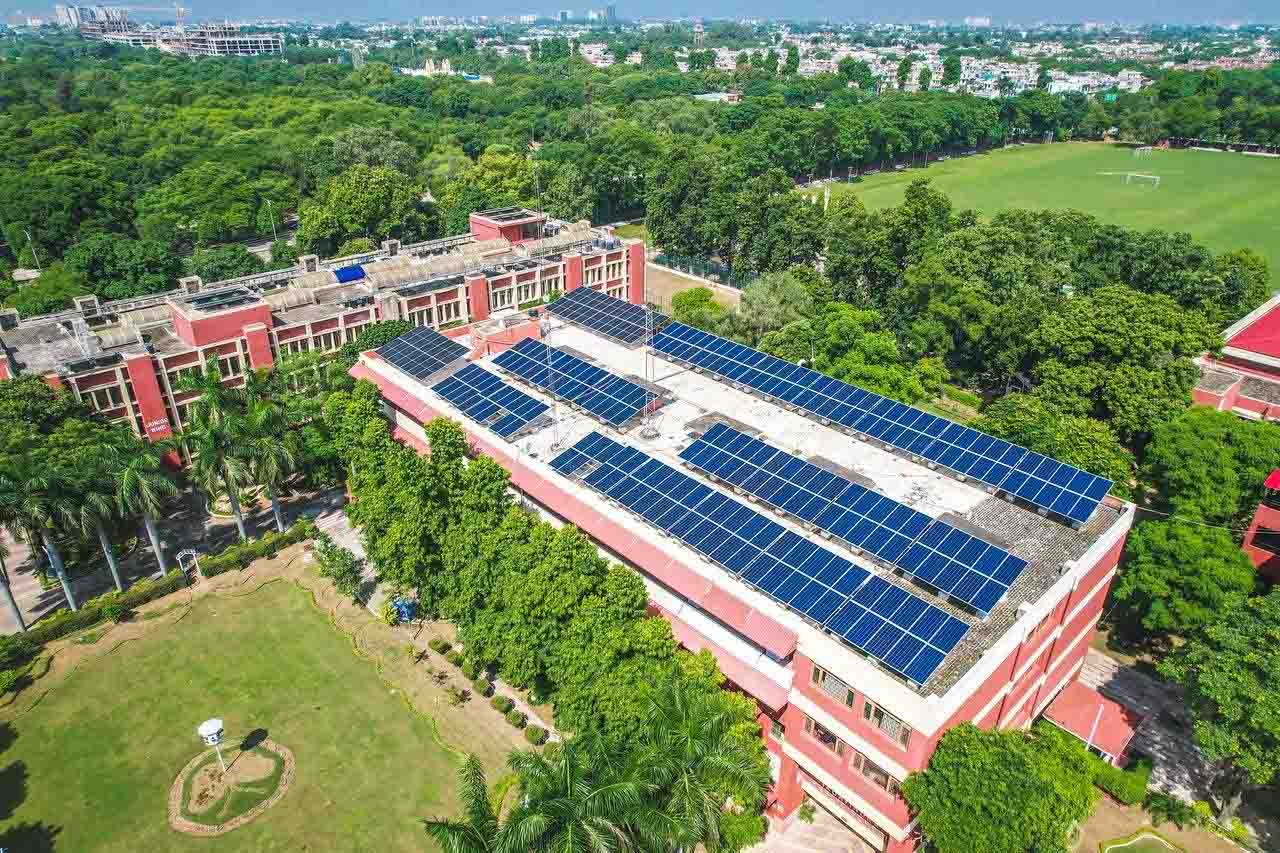
Suitable school roofs can generate electricity without requiring separate land for a ground-mounted system.
3. Better energy-cost planning
Solar can help institutions evaluate and manage a portion of their long-term electricity expenses.
4. Environmental education
A visible solar installation can provide students with a practical example of renewable energy and energy efficiency.
5. Sustainability goals
Schools and colleges can incorporate renewable energy into wider campus sustainability initiatives.
Actual savings depend on the system design, electricity consumption, tariff and applicable billing arrangement.
How Much Solar Capacity Does a School Need?
The correct capacity depends on the school’s electricity consumption and site conditions. A small school may need a relatively modest installation, while a large campus with laboratories, hostels or air conditioning may require a larger system.
Common capacities to evaluate include 5kW, 10kW, 25kW, 50kW and larger systems, depending on feasibility.
Before recommending a capacity, the installer should assess:
-
Monthly electricity consumption
-
Sanctioned load and contract demand, where applicable
-
School operating hours
-
Daytime electricity demand
-
Usable rooftop area
-
Roof structure and condition
-
Shading from nearby buildings or trees
-
Existing electrical infrastructure
-
Future campus expansion
Important: The system should be sized around the school’s actual energy needs, not simply the maximum number of panels that can fit on the roof.
What Is the Cost of Solar for Schools in Punjab?
There is no single price that applies to every educational institution. The total cost depends on the size and complexity of the installation.
The quotation may include:
-
Solar panels
-
Inverters
-
Mounting structures
-
DC and AC cables
-
Electrical protection equipment
-
Earthing and lightning protection
-
Monitoring equipment
-
Installation and testing
-
Roof repairs or structural work, if required
-
Electrical integration
-
Applicable metering and utility requirements
A school with a straightforward rooftop and accessible electrical infrastructure may have different installation requirements from a large campus with multiple buildings.
For this reason, institutions should request a detailed, site-specific quotation rather than relying solely on a generic per-kW price.
How Much Can a School Save With Solar?
Potential savings depend on the amount of solar electricity generated and how that electricity is used or credited under the applicable utility arrangement.
Important factors include:
-
Installed solar capacity
-
Solar generation throughout the year
-
Electricity consumption during school hours
-
Applicable electricity tariff
-
Export and billing arrangements
-
System maintenance and downtime
-
Financing and operating costs
Schools that operate primarily during daylight hours may be able to use a meaningful share of their solar generation directly.
However, institutions with large evening loads, hostels or holiday-period changes in consumption need a more detailed assessment.
A reliable proposal should estimate generation and savings using the institution’s actual electricity bills and operating schedule.
Is On-Grid or Hybrid Solar Better for a School?
The best option depends on the school’s objective.
On-grid solar
An on-grid system works alongside the utility grid. It is often worth evaluating when the main goal is reducing electricity purchases.
Advantages can include:
-
No large battery bank
-
Lower initial cost than a comparable battery-based system
-
Suitable operation alongside daytime electricity loads
-
Potential to scale for larger installations, subject to feasibility
A standard on-grid solar system generally does not provide backup power during a grid outage.
Hybrid solar with batteries
A hybrid system may be appropriate when the school requires backup power for selected loads.
Potential backup loads include:
-
Computer servers
-
CCTV and security systems
-
Internet equipment
-
Emergency lighting
-
Selected office equipment
-
Essential communication systems
Battery storage increases the initial investment. The school should identify which circuits require backup and size the battery system accordingly.
Do not assume that a typical battery installation can power an entire campus, including all air conditioning and laboratory equipment, during an outage.
Is Every School Roof Suitable for Solar?
No. A professional site assessment should consider:
Roof strength: The structure must safely accommodate the proposed installation.
Roof condition: Leaks, corrosion or other damage should be addressed before work begins.
Shading: Trees, nearby buildings, water tanks and rooftop equipment may reduce solar generation.
Roof layout: The design should preserve safe access and avoid obstructing drainage.
Electrical infrastructure: The existing system must be suitable for the proposed installation.
Student safety: Equipment placement, cable routing and access restrictions should account for the presence of students and staff.
Where a school occupies a leased building, management should also obtain the necessary property-owner permissions.
Can Schools in Punjab Receive Solar Subsidies?
Schools should not assume that residential rooftop solar subsidy programmes automatically apply to an institutional electricity connection.
The Ministry of New and Renewable Energy’s rooftop solar programme describes central financial assistance for eligible residential consumers, while institutional and commercial projects need to be assessed under the applicable programme and regulatory conditions.
Before including a subsidy in the project budget, school management should verify:
-
The institution’s consumer category
-
The specific scheme’s eligibility conditions
-
Whether any institutional funding programme applies
-
Current utility requirements
-
The applicable installation and procurement rules
For government schools and institutions, funding arrangements and procurement requirements may differ from those of private schools.
How to Plan a Solar Installation for a School
A practical project typically involves the following stages.
Step 1: Review electricity bills
Collect 6–12 months of bills if available. This helps establish the institution’s consumption pattern.
Step 2: Conduct a site survey
Assess roof area, shading, roof condition, access and electrical infrastructure.
Step 3: Select the system size
Choose a capacity that fits the school’s consumption and applicable requirements.
Step 4: Compare quotations
Review equipment specifications, installation scope, warranties, monitoring and after-sales support.
Step 5: Confirm applicable approvals
Verify the relevant utility process, metering arrangement and any institutional procurement requirements.
Step 6: Install and test the system
Ensure the installation includes appropriate electrical protection, earthing, testing and handover documentation.
Step 7: Monitor performance
Track generation and arrange maintenance according to the equipment and site conditions.
How to Choose a Solar Company for Your School
The lowest quotation is not necessarily the best option for a school or college.
Before selecting an installer, ask for:
-
A site survey and rooftop assessment
-
System design based on electricity bills
-
Details of solar panels and inverters
-
Mounting structure specifications
-
Electrical safety and protection details
-
A clear cost breakdown
-
Warranty information
-
Performance monitoring arrangements
-
Applicable utility documentation
-
After-sales service commitments
For larger campuses, ask whether the installer has experience with commercial or institutional installations of a similar scale.
Why Choose A.P. Tech Solar for an Educational Institution?
A.P. Tech Solar Technologies provides solar system design and installation services for residential, commercial and industrial requirements. Its website describes a project process that includes site visits, system design, project planning, installation and after-sales service.
For a school or college, the first step is to assess the campus’s electricity consumption, rooftop suitability and operational requirements.
A customised proposal can then identify the recommended capacity, equipment, estimated generation, project cost and applicable utility requirements.
Planning rooftop solar for your school or college in Punjab? Contact A.P. Tech Solar for a site assessment and customised institutional solar quotation.
Use the company’s actual contact or quotation page for the CTA: Contact A.P. Tech Solar.
Frequently Asked Questions
Is solar suitable for schools in Punjab?
It can be suitable for schools with appropriate roof space, electricity consumption and electrical infrastructure. A site assessment is needed to determine feasibility.
How much solar does a school need?
The required capacity depends on electricity consumption, operating hours, available roof space, sanctioned load and applicable regulations.
Can solar reduce a school’s electricity bill?
Yes. A properly sized system can reduce grid electricity purchases, but the actual savings depend on generation, consumption and the applicable billing arrangement.
Do schools need battery backup?
Not necessarily. On-grid solar may be sufficient when the primary goal is reducing electricity costs. Batteries can be considered for essential backup loads.
Is residential solar subsidy available to schools?
Schools should not assume that residential subsidy programmes apply to institutional connections. Eligibility must be confirmed under the specific scheme and consumer category.
How can a school get a solar quotation?
Provide recent electricity bills, basic campus details and rooftop information to a solar installer. A site survey can then help establish the appropriate system size and project cost.
Can solar be installed on a college campus with multiple buildings?
Potentially, yes. The layout, electrical connections, available roofs and applicable utility arrangements should be assessed before deciding whether one or multiple systems are appropriate.