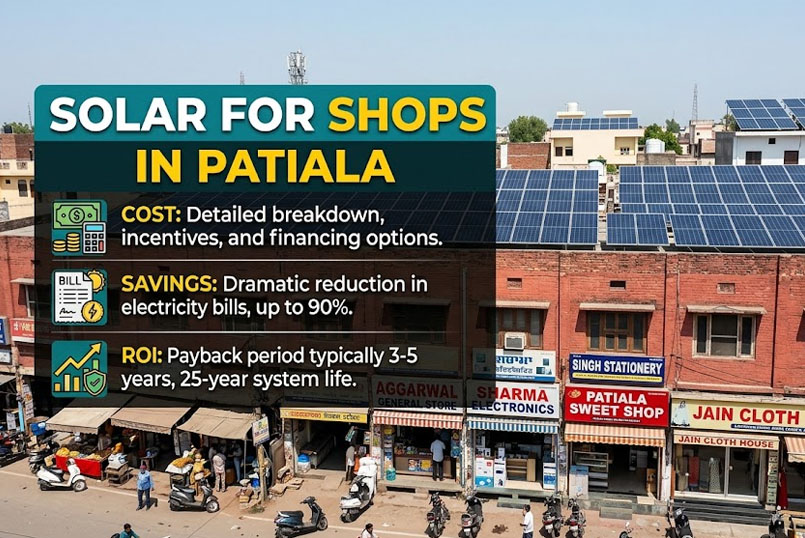
Solar for Shops in Patiala: Cost, Savings & ROI Guide
Electricity is a significant operating expense for many shops and commercial businesses in Patiala. Lighting, air conditioning, refrigerators, computers, display systems, CCTV, signage and other equipment can result in substantial monthly electricity consumption.
Installing a rooftop solar system can help eligible businesses generate electricity from their own roof and reduce dependence on grid power.
For shop owners considering solar, the important questions are usually:
- How much solar capacity does my shop need?
- What will a solar system cost?
- How much electricity can it generate?
- Can solar reduce my monthly electricity bill?
- What type of solar system is suitable?
- How long can it take to recover the investment?
This guide explains the key factors to consider when planning solar for shops in Patiala.
Why Should Shops in Patiala Consider Solar?
A shop’s electricity consumption often occurs during daylight hours, which can make rooftop solar particularly useful.
During business hours, shops may operate:
- Air conditioners
- Fans
- Refrigerators
- Freezers
- Lighting
- Computers and billing systems
- CCTV cameras
- Internet equipment
- Display screens
- Signboards
- Pumps and other equipment
A properly designed solar system can generate electricity during these operating hours and offset a portion of the shop’s electricity consumption.
Key benefits include:
- Lower electricity expenses
- Better control over long-term energy costs
- Productive use of unused rooftop space
- Reduced dependence on conventional grid electricity
- Potential long-term return on investment
- Cleaner energy for the business
For businesses with consistent daytime electricity consumption, a properly sized rooftop solar system can be particularly attractive.
How Much Solar Does a Shop in Patiala Need?
There is no single solar system size that works for every shop.
The correct capacity depends on the shop’s electricity consumption, sanctioned load, available roof area, operating hours and the type of equipment being used.
Common system sizes that may be considered include:
3kW Solar System
A 3kW system may be suitable for smaller shops with relatively moderate electricity consumption.
It can be considered for businesses such as:
- Small retail shops
- Offices
- Clinics
- Small showrooms
- Service businesses
5kW Solar System
A 5kW system may be appropriate for businesses with higher daytime electricity consumption.
For example:
- Medium-sized retail stores
- Clothing showrooms
- Electronics stores
- Restaurants
- Offices
- Small commercial establishments
10kW Solar System
A 10kW system can be considered where electricity consumption and available rooftop space are significantly higher.
It may be suitable for:
- Large showrooms
- Supermarkets
- Commercial offices
- Restaurants
- Workshops
- Larger retail businesses
The final system size should be determined after reviewing electricity bills and the site’s electrical and structural conditions.
How Much Does Solar for a Shop in Patiala Cost?
The cost of a commercial rooftop solar system depends on several factors.
There isn’t one fixed solar panel price for shops in Patiala because every project has different requirements.
The quotation can depend on:
- Solar system capacity
- Solar panel technology and brand
- Inverter brand and capacity
- Mounting structure
- DC and AC cables
- Protection equipment
- Earthing and lightning protection
- Installation requirements
- Roof type
- Electrical-panel modifications
- Net-metering or other applicable arrangements
- Monitoring system
- Battery backup, if required
- Site accessibility
A professional installer should therefore inspect the property and electricity requirements before providing a final quotation.
Does a Shop Need a Battery with Solar?
Not necessarily.
For many businesses, an on-grid solar system can be considered when the primary objective is reducing electricity costs.
An on-grid system works with the electricity grid and normally does not provide backup power when the grid is unavailable.
A battery becomes more relevant when a business wants backup power for selected loads.
For example, a shop may want backup for:
- Lights
- Computers
- CCTV
- Internet equipment
- Billing systems
- Security systems
- Selected fans
A hybrid solar system can combine solar generation, grid electricity and battery storage.
However, adding batteries increases the initial project cost, so the business should determine whether backup power justifies the additional investment.
Can Solar Reduce a Shop’s Electricity Bill?
Yes, a properly designed solar system can reduce electricity purchased from the grid.
The actual reduction depends on:
- Solar system capacity
- Electricity consumption
- Daytime load
- Solar generation
- Grid arrangement
- Applicable billing mechanism
- System performance
- Seasonal conditions
The most important point is that solar should be sized according to the shop’s actual consumption rather than simply installing the largest possible system.
How Does Net Metering or Solar Export Work for Commercial Consumers?
Commercial rooftop solar arrangements in Punjab can involve specific regulatory and utility requirements.
PSPCL maintains procedures for rooftop solar applications, while the applicable arrangements depend on the consumer category, system configuration and prevailing regulations.
PSPCL’s current 2026 commercial circular states a ₹2.97/kWh feed-in tariff for net-billing and gross-metering arrangements for FY 2026–27, applicable from April 1, 2026 through March 31, 2027.
Because electricity regulations and applicable arrangements can change, shop owners should confirm the current requirements before finalising a project.
PSPCL’s 2026 commercial orders also include updates concerning rooftop solar and net-metering procedures.
Is PM Surya Ghar Subsidy Available for Shops?
This is an important point for commercial customers.
The central financial assistance under PM Surya Ghar: Muft Bijli Yojana is designed for residential electricity consumers. MNRE’s programme information specifically describes CFA/subsidy for the residential sector.
Therefore, a shop using a commercial electricity connection should not assume that the residential PM Surya Ghar subsidy will apply.
Instead, the project economics should be evaluated based on:
- System cost
- Expected generation
- Electricity consumption
- Applicable tariff/billing arrangement
- Export treatment
- Maintenance
- Financing cost, if any
- Expected payback
Always verify the current rules before preparing a commercial solar quotation.
What Roof Area Is Required for a Shop?
The required roof area depends on the solar panel technology, panel wattage, mounting arrangement and spacing.
A rooftop assessment should check:
- Available roof area
- Shadow from nearby buildings
- Water tanks
- Signboards
- HVAC equipment
- Existing structures
- Roof orientation
- Roof strength
- Access for installation and maintenance
A smaller roof does not automatically mean solar is impossible. A professional site survey can determine how much usable area is actually available.
Why Daytime Electricity Consumption Matters
This is one of the most important factors for a commercial solar project.
Imagine a shop that operates from:
9:00 AM – 8:00 PM
and uses electricity for air conditioning, lighting, computers and other equipment during the day.
A significant portion of the solar generation can potentially be consumed directly by the business during operating hours.
This can improve the usefulness of the solar investment because the system is producing electricity while the business is operating.
Solar for Different Types of Shops in Patiala
Solar isn’t limited to traditional retail stores.
Retail Shops
Lighting, fans, air conditioning and electronic equipment can contribute to electricity consumption.
Clothing Showrooms
Large lighting loads and air conditioning can make energy consumption significant.
Electronics Stores
Lighting, display equipment, computers and air conditioning can create consistent electricity demand.
Restaurants
Refrigeration, lighting, fans, air conditioning and kitchen equipment can result in substantial consumption.
Medical Shops
Refrigerators, air conditioning, lighting, computers and other equipment can create a consistent load.
Offices
Computers, air conditioning, lighting, networking equipment and printers can contribute to daytime electricity consumption.
How to Calculate Whether Solar Makes Sense for Your Shop
Before purchasing a solar system, collect at least 6–12 months of electricity bills if available.
Review:
- Monthly electricity units consumed
- Monthly electricity bill
- Sanctioned load
- Contract demand, where applicable
- Daytime consumption
- Shop operating hours
- Available rooftop area
- Future electricity requirements
A solar installer can then use this information to estimate the appropriate system capacity and expected generation.
What Should You Check Before Choosing a Solar Installer?
Don’t choose a solar company only because it offers the lowest quotation.
Ask the installer about:
1. Solar Panels
Check the panel specifications, warranty and manufacturer details.
2. Inverter
The inverter is an important part of the system and should be properly matched with the solar array and electrical requirements.
3. Mounting Structure
The structure should be suitable for the roof and designed for long-term outdoor exposure.
4. Protection Equipment
The installation should include appropriate electrical protection, earthing and other safety components.
5. Monitoring
Ask whether the system provides performance monitoring so you can track solar generation.
6. Installation Quality
Good equipment cannot compensate for poor installation.
7. After-Sales Service
Ask who will handle maintenance, troubleshooting and warranty-related issues.
How Long Does Commercial Solar Take to Install?
Installation time depends on the size and complexity of the project.
A small rooftop system may require less time than a larger commercial installation involving:
- Multiple inverters
- Structural work
- Electrical upgrades
- Additional protection
- Larger cable routes
- Utility approvals
- Complex rooftop access
The complete project timeline should therefore include site survey, system design, quotation approval, procurement, installation, testing and applicable utility procedures.
How to Get the Best ROI from Shop Solar
To improve the financial performance of a solar project:
Choose the right system size
Don’t oversize the system simply because you have available roof space.
Analyse your electricity bills
Actual consumption is more useful than guessing your future requirements.
Prioritise quality
Very cheap equipment can increase maintenance and replacement risks.
Use daytime loads efficiently
Where possible, operate energy-intensive equipment during periods of solar generation.
Keep the panels clean
Dust and dirt can reduce energy production.
Monitor performance
Regularly check whether the system is producing close to the expected amount.
Why Local Installation Experience Matters in Patiala
Choosing a company with experience in the local market can make the installation process easier.
A local solar installer can help with:
- Site inspection
- System design
- Equipment selection
- Rooftop assessment
- Electrical integration
- Documentation
- Installation
- Testing
- Monitoring
- After-sales service
For commercial customers, the installation is not just about putting solar panels on the roof. The system should be designed around the business’s actual electricity requirements.
Why Choose A.P. Tech Solar for Your Shop?
If you’re planning solar for a shop in Patiala, A.P. Tech Solar can help evaluate your electricity consumption and rooftop requirements before recommending a system.
The process can include:
- Electricity bill analysis
- Rooftop assessment
- Solar capacity planning
- Equipment recommendations
- Installation planning
- System installation
- Performance monitoring
- After-sales support
Instead of selecting a system based only on its advertised price, get a customised assessment based on your actual electricity usage.
Planning solar for your shop in Patiala? Contact A.P. Tech Solar for a site assessment and customised solar quotation.
Frequently Asked Questions
Is solar suitable for shops in Patiala?
Yes. Shops with regular electricity consumption and suitable rooftop space can consider rooftop solar to reduce grid electricity consumption.
How much solar does a shop need?
It depends on electricity consumption, sanctioned load, operating hours, available roof space and the desired level of electricity offset. Common commercial systems can range from a few kW to much larger installations.
Can commercial shops get PM Surya Ghar subsidy?
The central PM Surya Ghar CFA is intended for residential consumers, so commercial shop owners should not assume that the residential subsidy applies to their connection.
Does a shop need batteries?
No. An on-grid system may be sufficient if the primary goal is reducing electricity costs. Batteries are more relevant when backup power is required.
Can solar work on a small shop?
Yes, provided there is adequate usable roof area and the electrical and structural conditions are suitable.
Is solar worth it for a shop?
It can be, particularly when the business has consistent electricity consumption and sufficient daytime load. A proper feasibility and financial analysis should be done before installation.
How can I find a solar company for my shop in Patiala?
Look for an installer that can provide a proper site survey, detailed quotation, quality equipment, professional installation, monitoring and after-sales support.