Solar Panel Installation for Schools in Punjab: Cost, Benefits & Guide
Schools and educational institutions use electricity every day for lighting, fans, computers, laboratories, air conditioning and other essential equipment. As electricity expenses increase, many institutions are exploring rooftop solar as a way to manage their long-term energy costs.
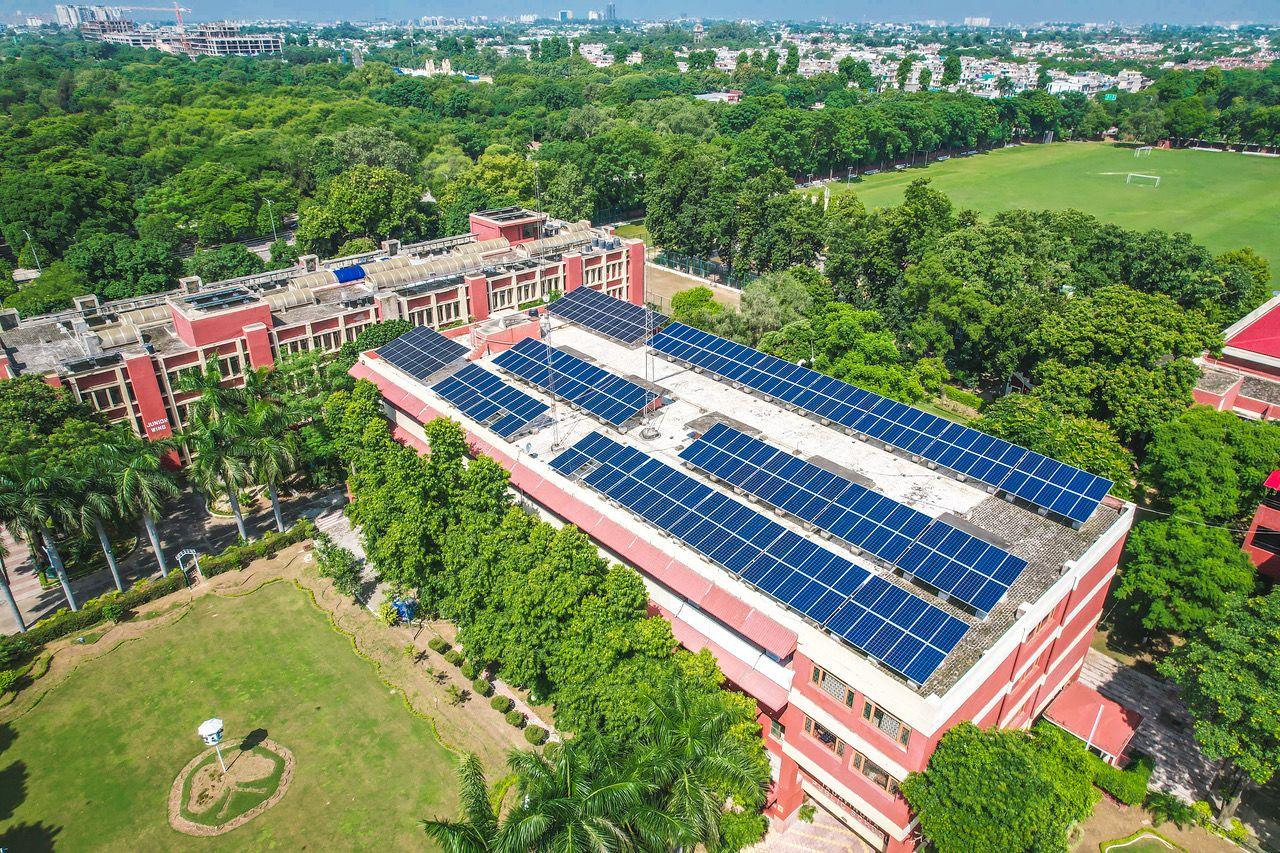
For schools in Punjab, a properly planned solar installation can help generate electricity on-site, make use of available rooftop space and support environmental education.
In this guide, we explain how schools can evaluate solar panel installation, estimate their system requirements and choose a suitable solar solution.
Why Should Schools Consider Solar Energy?
Solar energy can offer several practical benefits for educational institutions.
1. Reduce Grid Electricity Consumption
A rooftop solar system generates electricity that can be used within the school. This may reduce the amount of electricity purchased from the grid, depending on the school’s consumption and solar generation.
2. Make Use of Rooftop Space
Many schools have large buildings with open rooftops. A site survey can determine whether the available roof is suitable for solar panels.
3. Support Environmental Education
A solar installation can provide a real-life learning opportunity for students. Schools can use solar generation data to introduce topics such as renewable energy, electricity consumption and sustainability.
4. Manage Long-Term Energy Expenses
Solar panels can generate electricity for many years. The financial value of a system depends on its initial cost, electricity tariff, generation, maintenance and how much solar electricity the school consumes.
5. Support Sustainability Goals
Schools can demonstrate practical use of renewable energy as part of their environmental and sustainability initiatives.
What Type of Solar System Is Suitable for a School?
The right solar configuration depends on the school’s electricity needs, operating hours, grid connection and backup requirements.
On-Grid Solar System
An on-grid system works alongside the electricity grid.
It may be suitable for schools that:
-
Have a reliable grid connection
-
Consume a significant amount of electricity during school hours
-
Want to reduce grid electricity consumption
-
Do not require solar batteries for backup
A standard on-grid solar system generally shuts down during a grid outage for safety. It should not be considered a backup power source unless specifically designed with suitable backup equipment.
Hybrid Solar System
A hybrid system combines solar generation, grid electricity and battery storage.
It may be considered when a school needs backup for selected equipment or wants to store some solar energy for later use.
The required battery capacity depends on which loads need backup and for how long.
Off-Grid Solar System
An off-grid system operates independently of the electricity grid and requires suitable energy storage and system design.
It may be relevant for locations with limited or unavailable grid access. A professional assessment is needed to size the system for the school’s daily and backup requirements.
How Much Solar Capacity Does a School Need?
There is no single solar system size suitable for every school.
A smaller school may require a relatively modest system, while a larger campus with computer labs, air conditioning and other electrical loads may need a much larger installation.
The system size should be based on:
-
Recent electricity bills
-
Monthly and seasonal consumption
-
School operating hours
-
Daytime electricity demand
-
Available rooftop area
-
Shading and roof orientation
-
Sanctioned load and applicable connection requirements
-
Future expansion plans
Example system sizes
|
Approximate Capacity |
Possible Application |
|---|---|
|
5–10 kW |
Small school or selected building |
|
10–25 kW |
Medium-sized school |
|
25–50 kW |
Larger school or campus |
|
50 kW+ |
Large campus or institution |
These are illustrative categories only. Actual capacity should be determined through electricity-bill analysis and a site survey.
How Much Does School Solar Installation Cost in Punjab?
The cost of a school solar project depends on the system capacity and installation requirements.
Factors affecting the quotation include:
-
Solar panel brand and wattage
-
Inverter type and capacity
-
Mounting structure
-
Roof type and condition
-
Electrical infrastructure
-
Cable length and routing
-
Earthing and protection equipment
-
Installation complexity
-
Monitoring and commissioning
-
Battery backup, if required
A school should request a detailed quotation that clearly lists the equipment, installation scope, warranties and exclusions.
Avoid comparing quotations only by total price. Two proposals may differ in equipment quality, system design, safety provisions and after-sales support.
How Can Schools Estimate Solar Savings?
Solar savings depend on how much electricity the school consumes while the solar system is generating electricity, along with the applicable tariff and grid-settlement rules.
Schools should review:
-
Annual electricity consumption
-
Electricity usage during school hours
-
Seasonal changes in usage
-
Expected solar generation
-
Applicable electricity tariff
-
Grid export and settlement arrangements
-
Project cost and maintenance expenses
For example, a school operating mainly during daylight hours may be able to use a substantial portion of its solar generation directly. However, the actual result depends on the school’s load profile and system design.
A solar provider should prepare a project-specific estimate rather than promise a fixed percentage of savings.
What About Solar During School Holidays?
Schools may consume less electricity during holidays, weekends or seasonal breaks.
This can affect how much solar electricity is used directly on-site.
Before choosing the system capacity, review the school’s operating calendar and seasonal electricity usage. The appropriate grid export or settlement arrangement should also be confirmed under the applicable rules.
Is Battery Backup Necessary for Schools?
Not every school needs batteries with its solar installation.
A battery may be useful if the school needs backup for selected loads such as:
-
Computer systems
-
Network equipment
-
Office systems
-
Emergency lighting
-
Selected essential equipment
However, batteries add to project cost and require careful sizing.
If the school’s main objective is to reduce electricity bills while connected to the grid, an on-grid system may be worth evaluating first.
How to Choose a Solar Company for Your School
A school solar project should be handled by an installer who can explain the technical and financial aspects clearly.
Look for a company that can provide:
A Proper Site Survey
The installer should inspect the roof, electrical infrastructure, shading and access requirements.
A Clear System Design
The proposal should explain the recommended capacity, expected generation and equipment selection.
A Detailed Quotation
The quotation should specify what is included, what is excluded and which warranties apply.
Installation and Safety Planning
The installer should explain how work will be carried out safely on school premises and how disruption will be minimised.
After-Sales Support
Ask how system monitoring, troubleshooting and maintenance requests will be handled.
Why Choose A.P. Tech Solar?
A.P. Tech Solar helps institutions evaluate solar installations according to their electricity needs and site conditions.
For schools and educational institutions in Patiala and across Punjab, our project assessment can include:
-
Electricity consumption review
-
Rooftop suitability assessment
-
System sizing and layout
-
Equipment selection
-
Installation planning
-
Applicable application-process guidance
-
Customised quotation
If your school is considering rooftop solar, contact A.P. Tech Solar to discuss your requirements and arrange a site assessment.
Explore a solar solution designed around your school’s energy needs.
Frequently Asked Questions
Can schools install rooftop solar in Punjab?
Schools can explore rooftop solar subject to site suitability, applicable electricity-connection requirements and the relevant approval and metering process.
What size solar system does a school need?
The required capacity depends on electricity consumption, school operating hours, roof space and future needs. A site survey and bill assessment can help determine the appropriate size.
Is battery backup necessary for a school solar system?
Not always. Batteries are generally considered when backup power is required. A standard on-grid system typically does not provide backup during a grid outage.
Can solar reduce a school’s electricity bill?
Solar may reduce grid electricity consumption. Actual savings depend on solar generation, daytime usage, tariff and the applicable grid-settlement arrangement.
Do schools qualify for residential solar subsidies?
Schools should not assume that residential subsidy schemes apply to institutional or commercial installations. Eligibility should be confirmed under the current scheme rules.
How long does school solar installation take?
The timeline depends on system size, roof conditions, equipment availability, approvals and commissioning requirements. Ask the installer for a project-specific schedule.